Showing posts with label gyn cancers. Show all posts

Thursday, October 17, 2024

#gyncsm Survey 2024 Results Are In!

While the number of responses to this year's #gyncsm Survey was not as high as in 2019 (11 vs. 33),  Christina and I wanted to summarize the results and share them with the community. 

Of the eleven responses, the majority were gyn cancer patients, followed by caregivers, healthcare providers, a previvor, and cancer researcher. When asked what cancer diagnosis a patient/survivor/caregiver was dealing with the majority (6) were ovarian cancer, with one with endometrial cancer, one with vaginal cancer and one other cancer. Those who responded in the health care field represented cancer researchers, a therapist, a nurse and two in the other category. 

When asked how they found the #gyncsm chat and community, most responded that they stumbled upon it on X/Twitter while one responded they joined us from the Inspire(/OCRA) community. The eleven respondents participated in our community in the following ways: 
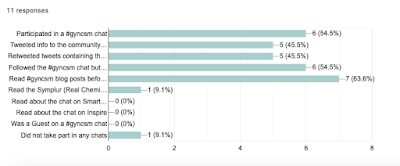
When asked if they visited our blog in the past year the majority of respondents read the blog post before or after the chat while others visited it to check the resources. Forty-five percent did not know we had a website/blog. 

When asked about the most important topics that we have covered in the past two years, Advocacy and Survivorship were the most popular topics while there were no choices for urogynecology . 

When asked how they used what they learned in our chats the majority shared that they advocated for themselves or their loved one, followed by recommending or using the resources we provided. The results for this question were similar to results from our 2019 community survey (see: 2020 ASCO Annual meeting survey results abstract https://meetings.asco.org/abstracts-presentations/187383). 

Suggested topic ideas for the future included:

  • Finding clinical trials in your area 
  • Cancer induced infertility
  • PTSD and fear of recurrence
  • Long term survivorship - is it Luck?
  • How close are we to a screening test 
  • Staging of disease - should it be revised
  • Mental health 

Respondents preferred quarterly meetings at 8pm on the second Wednesday of the month.  Three respondents would like to see the #gyncsm community on Facebook. 

Thank you so much to all the survey participants for taking part in this survey and for everyone's continued support and use of the #gyncsm hashtag.  

See you in December when we chat about cervical cancer. 


Dee and Christina 

Co-moderators of the #gyncsm 


Wednesday, March 13, 2024

March 13, 2024 Using Immunotherapies to Treat Gyn Cancers

We were pleased to have Dr. Katie Kurnit (@KatieKurnit) a gynecologic oncologist from the University of Chicago (@UCCancerCenter) join us for our chat on Using Immunotherapies to Treat Gyn Cancers. 

Below is a sampling of the responses to our topic questions. You may find the transcript here and analytics here. 

T1: What is immunotherapy? How is it different from other gyn cancer treatments (surgery, chemo, radiation)? How many types of immunotherapy are there? 

  • via@AmericanCancer Immunotherapy is treatment that uses a person's own immune system to fight cancer. Immunotherapy can boost or change how the immune system works so it can find and attack cancer cells.
  • T1: Immunotherapy is a cancer treatment that works with the person’s immune system to fight cancer. This makes it different from chemotherapy which focuses more on killing cancer cells directly. (1/2)
  • T1: Both immunotherapy and chemo can travel throughout the body, rather than focusing on a specific area of the body like radiation or surgery. And there are lots of different immunotherapy treatments emerging now! (2/2) #gyncsm
  • This graphic from the @AACR Cancer Progress Report shows the different types of immunotherapies


T2: Which gyn cancers have immunotherapy treatments approved by the FDA? Are there immunotherapies in trials now that show promise? 
  • T2: Currently, both #cervicalcancer and endometrial cancer have tumor type-specific @FDA approvals. Each of these indications requires some molecular testing on the tumor to help determine which regimen would be best. (1/2) 
  • T2: There are also broader approvals that are based on a molecular test result, such as mismatch repair deficiency or high tumor mutational burden, that have immunotherapy approvals for any type of cancer . (2/2) 
  • Excellent review of immunotherapies in this @ASCO publication  ascopubs.org/doi/10.1200/ED Immunotherapy in Gynecologic Cancers: What We Know Now and Where We Are Headed  
  • Here's another excellent one specific to #ovariancancer #gyncsm ascopubs.org/doi/full/10.12 Cervical Cancer immunotherapies include vaccines like Gardasil-9® for HPV , ADC like Tisotumab vedotin and ICI Pembrolizumab  cancerresearch.org/cancer-types/c
  •  Immune response very critical given #cervicalcancer and other #hpvcancers are viral mediated! Would just clarify the #hpv vaccine is available for primary prevention but not tx but others are for therapy of recurrent disease currently

T3: How is it determined if immunotherapy is an appropriate treatment option for an individual?

  • Your general health is considered. What kind of cancer; size of tumor; stage. Have you had prior treatment?
  • T3: The individual and doctor would discuss the pros/cons of both the immunotherapy and the other treatment choices. Certain medical conditions, like some autoimmune diseases, may make it less safe to use immunotherapy.
  • T3: There is a need to improve access to molecular tests, especially in developing countries. This limits the decision to use immunotherapy.
  • T3: Even if no immunotherapy is approved, remember that many other immunotherapies are being tested in clinical trials 
  • T3: currently FDA approval in #gyncsm is in endometrial and cervical depends on specific molecular testing; testing can also help clarify immunotherapy alone vs with other drugs ex. Pembro/lenvima vs Pembro only in #endometrialcancer recurrence

T4: What is the immunotherapy treatment experience like? What are the common side effects with immunotherapy and how do they differ from other gyn cancer treatments?

  • T4: In general, I've found that many people feel well while receiving treatment with an ICI, and may end up staying on this treatment for several yrs if it works well. Side effects are different than chemo
  • T4 One different one that I heard of was blurry vision on Mirvetuximab soravtansine. Certain eye drops were prescribed for use during the treatment. But it was not a long term effect.
  • yes! being aware of side effects seen in #clinicaltrials of these newer drugs allows us to be prepared and have a plan in place to treat symptoms when they arise 
  • T4: Like any cancer treatment, side effects vary widely between individuals. It important to stay in communication with your healthcare team about side effects and there are many options to try to mitigate various side effects. 
  • T4: Side effects are different from traditional chemo, and are often due to inflammation by the immune system; so-called “-itis” es. Ex colitis (inflammation of the colon), thyroiditis (of the thyroid), hepatitis (liver), etc.

T5/6: What advice would you give to others considering an immunotherapy treatment or trial? What are some resources for learning more about immunotherapy in treating gyn cancers? 

Remember you can continue our discussion about immunotherapy treatments on Smart Patients by joining Smart Patients at https://www.smartpatients.com/partners/gyncsm. 

We are chatting quarterly this year. See you June 12, 2024 at 8PM ET as we discuss the latest research news from the #ASCO24 and #SGOmtg . 

The Society for Gynecologic Oncology @SGO_org is hosting their meeting March 16-18. So stay tuned over the next few days to #SGOMtg for updates on immunotherapy and all things gyn cancer related. We'll do a #gyncsm research update chat this summer.

Dee and Christina
#gyncsm Co-founders

Additional Resources 
Cancer Research Institute resources on immunotherapy 

CancerDotNet Side Effects

American Cancer Society - Side Effects 
Monoclonal Antibodies 
Immune Checkpoint Inhibitors

NCI general immunotherapy page 

Wednesday, March 10, 2021

March 10, 2021 Disparities in Gyn Cancer Diagnosis and Treatment

The #gyncsm community welcomed Dr. Dineo Khabele (@DKhabeleMD), Washington University School of Medicine gynecologic oncologist to this month's chat on Disparities in Gyn Cancer Diagnosis and Treatment. Advocates, researchers and health care providers participated in our important discussion. 

Here is a sample of the responses to our topic questions.  You may read the complete transcript here and additional analytics here. 

T1: What are cancer disparities? What factors can contribute to cancer disparities? 
  • Disparities range from race or ethnicity, to location, to age, gender identity, socioeconomic status, disability, insurance coverage, etc. All of these and more contribute to cancer care.
  • Cancer disparities are differences in the incidence, prevalence, and mortality among specific populations. Contributing factors are social determinants of health, healthcare systems, and discrimination. 
  • "Cancer affects all population groups in the United States, but due to social, environmental, and economic disadvantages, certain groups bear a disproportionate burden of cancer compared with other groups." NCI
  • Don't forget the rarity of the cancer. Rare cancers, including gyn ones, generally get less funding for research and support services. #sarcoma
  • “Your zip code matters more than your genetic code.”
  • Society, financial, ethnicity, geography, gender identity.... So many people don’t get the care they need and deserve.

T2a: What are some of the cancer disparities that show up in the diagnosis of gynecologic cancers? 
T2b: What are some of the cancer disparities that show up in the treatment for gynecologic cancers?
  • African Americans are more likely than Caucasians to be diagnosed with regional or distant stages for most cancers. Hispanic women are 40% more likely to receive a #cervicalcancer diagnosis. Asian Americans are at 5x the risk! 
  • Black women and Latinas are more likely to be diagnosed with advanced stage disease.
  • per @theNCI the incidence rates of colorectal, lung, and cervical cancers are much higher in rural Appalachia than in urban areas in the region.
  • Lack of access to follow up for an abnormal Pap test or abnormal uterine bleeding also contributes to delays in diagnosis.
  • We know African American women are DYING at 2x the rate as their Caucasian peers. We also see disparities in the stigma attached to an HPV-related cancer, gender identification, socioeconomic status, and location, location, location
  • Black women are less likely to be operated on by a high-volume surgeon or to be offered clinical trials. This leads to worse outcomes.
  • mentioned in the @AACR Cancer Progress Report: "African American and Hispanic patients with early-stage cervical cancer are more likely to forgo surgery, which is the standard of care, compared with white patients (17% and 12% vs 9% respectively)"
  • In #gyncsm care especially, high-case volume and gyn-onc specialists have statistically better outcomes. So the disparities in access and overall can really hit hard.

T3: Studies have found African-American women experience higher mortality from #endometrialcancer than any other group of women. What factors are researchers looking into to explain and address this disparity? 
  • Endometrial and cervical cancer have some of the largest racial disparities among all cancer disease sites. This may be partly due to the double whammy of poor quality care for patients who are WOMEN and BLACK.
  • Black women (not just in the U.S.) are more likely to be diagnosed with uterine #sarcoma, which tends to be more aggressive than endometrial carcinoma.
  • @KemiDoll is a leader in this field. Racism is a driving contributor to poor outcomes in #endometrialcancer.
  • although endometrial cancer disparities for decades were assumed to be related to genetics @KemiDoll brilliantly demonstrated how care for Black women with #endometrialcancer is delayed.
  • It is great to see researchers leading the way into figuring out the disparities in endometrial cancer and groups like @ECANAwomen who are supporting the research and the women.
  • Multiple factors. Some I think about 1) delays in diagnosis and work up of abnormal bleeding 2) inadequate or no surgery 3) biases affect adjuvant therapy recommendations or uptake 4)% higher high risk histology— we need more work there!
  • Decades and billions of dollars of funding have shown these are not genetic difference. The healthcare system needs to re-evaluate how we have failed women who are Black with #endometrialcancer
  • Historically, People of Color were not represented equitably and statistics show: African Americans are 13% of US Population but only 3% in oncology trials, Hispanics 19% of US Population but only 6%. Disparities can be minimized with health equity and access to care.

T4: American Indians and Alaska Natives have higher incidence and mortality rates for cervical cancers and higher mortality for uterine cancer. What role does future research play in addressing disparities such as these?
  • Racism in healthcare delivery is a huge problem. We’ve been looking at the lit and many researchers have found that implicit bias and anti-radicals training is desperately lacking in healthcare education
  • We need to bring screening to their location and programs to reduce risk https://www.cdc.gov/cancer/dcpc/research/articles/cancer-AIAN-US.htm
  • Groups like @AICAF_Org are working in native communities to address cancer disparities. Research for gyn cancer is already on the low side. Then add that the treatment studies are mostly caucasian participants and you can see the challenges.
  • We need more research in these communities about the experience of women diagnosed with the cancers too to understand the missed opportunities best. I suspect issues of access to health care system and delayed work ups contribute
  • T4: Serious kudos to Amanda Bruegl, M.D. who is a great resource on disparities related to gyn cancer in Native Americans. She has been looking at HPV vaccine uptake, access to care and historical disenfranchisement as causative of poor outcomes in #cervicalcancer.
  • Similar to other marginalized and minoritized groups, social determinants of health are the main drivers for these disparities in Native American communities. We need to involve affected communities in research and care.

T5: What are some population groups beyond racial and ethnic minorities for which cancer disparities in the U.S. exist?
  • People with disabilities typically have lower cancer screening rates than people without disabilities. They face barriers like transportation, wait time for appointments, and difficulty getting to an appointment.
  • Lower screening rates are also seen in the LGBTQ+ community. Common barriers include fear of discrimination and lack of information. It is important to "screen the body parts you have.
  • Individuals from the LGBTQ+ community experience cancer disparities due to structural discrimination and social determinants of health. For example, transgender men with a cervix are less likely to receive cervical cancer screening tests.
  • The rural/urban disparities are pretty stark with gynecologic cancer. There are also age disparities - some due to "too young for cancer" thinking.
  • Remote geography decreases access to care. #gyncsm. We need to partner community healthcare with larger health care systems.
  • The issue of bias against women influences all the care that women with #gyncsm receive. The cancer center's focus is rarely gynecologic. Funding for gyn cancers is disproportionately low. Gynecologic oncologists are under-represented in healthcare leadership.
  • We can include underinsured / uninsured, and language barriers to our groups too.
  • Rural and urban disparities have to do with lack of access to quality care. Agree with age myths. We are diagnosing endometrial cancer at younger ages.  
  • Transportation is a huge barrier. Rural patients and caregivers struggle to make it to appointments, pay for gas, take time off of work.

T6: What are some resources and groups helping to address disparity and equity issues? How can advocates help to reduce gyn cancer health disparities in our own communities?
  • We [Cervivor] are here for anyone diagnosed with #cervicalcancer. For LGBTQ resources: @cancerLGBT For People with Disabilities: @CancerLegalHelp We believe sharing your story matters. You have the power to shift the narrative!
  • Patient Advocates should center marginalized voices! Surround yourself with patients from diverse backgrounds as much as you can to understand the different challenges and complexities.
  • Resources @GYNCancer @SGO_org. Advocates can raise awareness in their communities, become research advocates, and lobby for more funding for research and care.
  • we need to make policy changes @ACSCAN has a chartbook and is working on policy https://t.co/INVqSyfYVF
  • Talk with your nurse, your doctor and your care team. Local resources may often be the best resource for patients. Eliminating inequities begins locally, extend regionally and gains traction nationally.
  • @SGO_org recently made this joint statement https://www.sgo.org/news/joint-statement-collective-action-addressing-racism/
  • More on the survivorship aspect, but sharing information about the side effects of treatment may help lessen disparities due to lack of treatment toxicity support A good organization for pelvic radiation from the UK is @PRDA_uk
  •  If you’ve never seen it the classic documentary Southern Comfort is an excellent watch for those of us who care about disparities in Gyn Cancer. https://transguys.com/videos/southern-comfort
  • While social determinants of health play a great role in #healthdisparities, there is evidence that health professionals themselves contribute to health disparities through non-inclusive medical processes and biased interventions.
  • And these community partnerships would be incredibly beneficial to cultivate BEFORE screening/diagnosis. Meeting people where they are for community health education PRIOR to a time of need can help reduce disparities down the road.
  • Groups like @IamCervivor @ECANAwomen @ucan2020 @SHAREing are doing excellent work. I'm missing many so if you are working in the space of disparities, please let me know.  


Note: There will be no #gyncsm chat in April. Save the date for our next chat Wednesday, May 12, 2021 at 8pmET (new time for 2021) when we’ll discuss “Cancer Survivors: Risk of Recurrence and Other Cancers/Diseases”.

Stay Safe,

Dee 


Additional Resources Shared

Geographic disparities in the distribution of the U.S. gynecologic oncology workforce: https://www.ncbi.nlm.nih.gov/pmc/articles/PMC5699889/

Palliative care: Racial and ethnic disparities in palliative care utilization among gynecological cancer patients https://www.sciencedirect.com/science/article/abs/pii/S0090825820341597


Thursday, March 4, 2021

Disparities in Gyn Cancer Diagnosis and Treatment - March 10, 2021 Chat

We are grateful that joining us for this month's chat on Disparities in Gyn Cancer Diagnosis and Treatment will be Washington University School of Medicine, gynecologic oncologist Dr. Dineo Khabele (@DKhabeleMD). The chat will be  held on Wednesday, March 10, 2021 at 8pm ET (7pm CT, 5pm PT) which is our new time slot.

Using the following topic questions we will discuss factors that contribute to health care disparities in general and gyn cancer disparities in particular and examine what organizations and health care systems are doing now to reduce disparities and what role advocates can play in addressing disparities in our communities.

T1: What are cancer disparities? What factors can contribute to cancer disparities? 

T2a: What are some of the cancer disparities that show up in the diagnosis of gynecologic cancers? 
T2b: What are some of the cancer disparities that show up in the treatment for gynecologic cancers?

T3: Studies have found African-American women experience higher mortality from #endometrialcancer than any other group of women. What factors are researchers looking into to explain and address this disparity? 

T4: American Indians and Alaska Natives have higher incidence and mortality rates for cervical cancers and higher mortality for uterine cancer. What role does future research play in addressing disparities such as these?

T5: What are some population groups beyond racial and ethnic minorities for which cancer disparities in the U.S. exist?

T6: What are some resources and groups helping to address disparity and equity issues? How can advocates help to reduce gyn cancer health disparities in our own communities?

You can find an overview on the topic of Cancer Disparities from the National Cancer Institute at https://www.cancer.gov/about-cancer/understanding/disparities

Professional organizations in obstetrics and gynecology, including the SGO, have issued a Joint Statement of Collective Action Addressing Racism. The statement includes actions that can be taken - Collaboration, Education, Recognition and Scholarship, Inclusion, Caring for Patients, Policy and Advocacy. You may read the statement at https://www.sgo.org/news/joint-statement-collective-action-addressing-racism/

We hope you can join us in this important discussion. 

Dee and Christina
#gyncsm Co-founders 

PS: Don't forget the SGO Meeting (#SGOMtg) Virtual Meeting takes place from March 19-25. Register at https://www.sgo.org/events/annual-meeting/

Wednesday, April 11, 2018

SGO Annual Meeting Research Review and Ask the Doc April 2018

Twenty-four participants shared what they had learned at the SGO Annual Meeting or asked questions about research presented at the meeting during this month's #gyncsm chat. You may find more analytics here. You may find a transcript from the chat here.

We covered a number of different research areas from treatments to survivorship to funding for research.

T1: What were the results of the study comparing minimally invasive surgery (MIS) w/ radical hysterectomy in early cervical cancer. Will the results change practice?

  • "Disease-free survival following minimally invasive procedures significantly lagged behind radical hysterectomies done by open laparotomy," -Pedro T. Ramirez, MD. I found this fascinating.
    • some suggested uterine manipulator use (not assessed in the study), also discussed immature data, early stopping.
    • Any reasons would be speculation. But I think we get bigger tissue margins with open surgery
    • data safety monitoring committee (filled with GYN ONCS) said the study should be stopped
T2: Several studies used targeted therapies to treat #ovariancancer - Which results stood out for you? Were side effects critical in any of the studies?
  • The #PARPi combinations are very exciting - responses and improved outcomes regardless of #BRCA status are encouraging
  • From our Scientific Director, Dr. Deb Zajchowski, “Exciting preliminary results for PARP inhibitors combined with immune checkpoint inhibitors — particularly in platinum-resistant patients.” (@ClearityFnd) 
T3: Which studies presented at the meeting will impact treatment of women with #endometrialcancer #uterinecancer #sarcoma?

  • The combo of everolimus & letrozole was quite successful in #endometrialcancer - this is the 2nd study to demonstrate this
  • Excited re our study (in rodents) of everolimus-eluting IUD pres by @JDottinoMD - could allow pts to avoid surgery in endo ca


  • My friend Matt Anderson, MD, PhD, presented on the genomic profiling of #uterine #leiomyosarcoma from The Cancer Genome Atlas as well as his own lab in Baylor. Data from @ALazarMDPhD was included. This is bigly important for us
  • I was not at SGO but results from the phase 2 trial looking at carbo/taxol vs carbo/tax + trastuzimab (herceptin) in uterine serous CA with Her2/neu overexpression were presented. Improved PFS w/addition of herceptin.
    • Agree... exciting abstract. Several pre-analytical issues that can affect Her2 testing results which will be important to consider for the future
T4: What research on palliative care and survivorship do you think will impact patients lives the most - or that survivors should ask their gyn/onc's about?

  • There was a study that finally measured and estimated rates of post op lymphedema which were much higher than anticipated. If we can measure it we can look for ways to reduce it. 
  •  Overall, I think it has been great to see an increase each year in survivorship studies and talk of long-term care planning and navigators/coordinators. Patients living longer and more emphasis on support.
T5: Once again studies showed less gyn cancer clinical trials and lower funding for gyn cancer research. What suggestions were made to increase enrollment and funding?
  • We MUST advocate for gynecologic cancer funding - write your Congressman and tell them that this funding must be INCREASED!!
  • the photo in this tweet shows how great the need is via @ShannonWestin
  • Outcomes are better for minorities who have access to #clinicaltrials - we need funding to ensure these trials are available 
    • I thought this was an important study. #clinicaltrials are an important part of cancer care. Many in general population still think trials are last resort and consider them "experimental" in a very negative risky way.
  • From our Scientific Director, Dr. Deb Zajchowski, “We need more funding. We also need to get the word out to enroll in the many clinical trials that are already available. There are more than 300 #clinicaltrials that #ovariancancer patients can enter.”
We have several questions/thoughts out there - feel free to now add any additional tweets re: the latest gynecologic cancer research.
  • Here is a link to a study reported at SGO on a vaccine to prevent recurrence in OC https://t.co/phQx2osDcN
  • Can you please tell us a little more about check point inhibitors and what that they’re used for in regards to #Lynchsyndrome cancers
    • Right now - they are FDA approved for any tumor that has MSI (microsatellite instability) - that includes Lynch Syndrome assoc tumors
    • Essentially the MMR in LS makes the cells more susceptible to attack by the immune cells. The checkpoint inhibitors allow the immune system to be more effective.
  • Still on #uterine #leiomyosarcoma: I'm glad the #sarcoma med oncs talked about the many lines of chemo -- I can think of at least 6 -- they might give. Some gyn oncs offer fewer
  • I was very surprised that chemo for early stage endometrial Cancer didn’t improve outcomes. Especially after last years ASCO when it was discussed that it may replace radiation.
  • Great video to share (from SGO) on clinical trial basics! https://t.co/UWjBqxQ584
  • There was a study that finally measured and estimated rates of post op lymphedema which were much higher than anticipate…
Additional resources mentioned during the chat may be found below. 

Patients and caregivers are invited to continue our discussion on the Smart Patients platform at  https://www.smartpatients.com/partners/gyncsm

Join us next month on Wednesday May 9,2018 at 9pm ET for our chat on Palliative Care - When and Why? with guest Christian Sinclair @ctsinclair (#hpm). 

See you then, 

Dee
#gyncsm Co-founder


Resources:


Friday, April 6, 2018

April 11, 2018 Chat - SGO Annual Meeting Research Review and Ask the Doc


Part of our mission as a community for those impacted by gynecologic cancers is to inform and educate our followers regarding new developments in disease screening, treatment and survivorship.

A number of those developments were presented as research studies and practice innovations during the SGO Annual Meeting in New Orleans in March. This 49th Annual Meeting drew over 2500 participants including gynecologic oncologists, oncologists, radiologists, genetic counselors, oncology nurses and patient advocates. The #gyncsm community will discuss research projects and trial results presented at this meeting during our monthly chat on April 11, 2018 at 9pm ET (8pm CT, 6pm PT).

Join us as we cover a variety of research topics including answering questions such as:

What is the impact minimally invasive surgery has had on survival of women diagnosed with early stage cervical cancer? 

What is the latest news on the use of targeted therapies (niraparib, pemrolizumab, Olaparib, durvalumab) in treating ovarian cancer?


What impact could Phase I trial of Vigil® vaccine personalized engineered autologous tumor cells (EATC) have on preventing recurrence in women with ovarian cancer ?

What is the role of palliative care and lay navigators in treating and supporting gyn cancer survivors ?

What is the impact of chemotherapy and radiotherapy on endometrial cancer survival? 

How can we improve funding for gyn cancer research?

What is the impact of participation in clinical trials on minority patients? 

During the chat we will open the discussion to questions participants have for our health care professionals.

Check the SGO Facebook page (https://www.facebook.com/SGO.org/), their Twitter account (@SGO_org and #SGOmtg), or their website (https://www.sgo.org/education/annual-meeting-on-womens-cancer/annual-meeting-media-coverage-3/) for more meeting coverage and potential topics of interest.

We look forward to having you join us.

Dee
#gyncsm co-moderator